

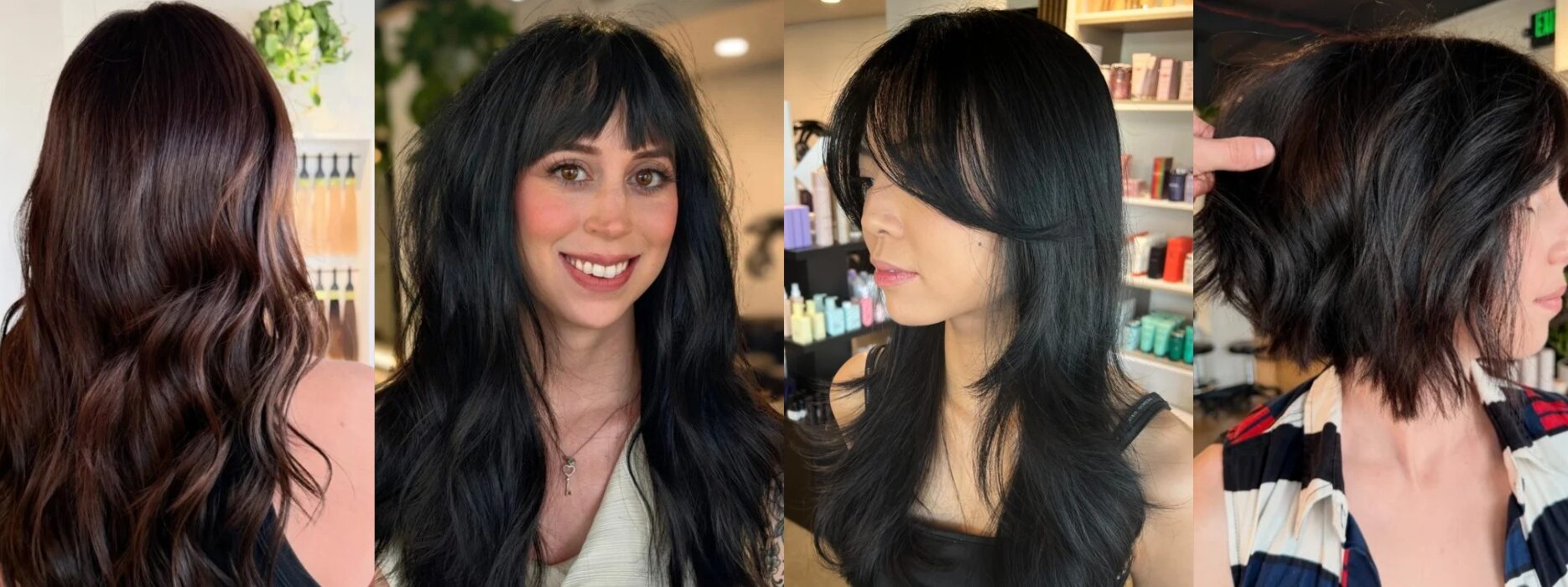
Black is the most decisive hair color there is. It photographs like glass, costs less to maintain than almost any other shade, and changes a face more than people expect. It is also the color clients most often regret rushing into, because black goes on easily and comes out hard. Before you commit, it helps to know that black is not one shade: jet, soft black, blue-black, and espresso all read differently in person, and the right pick depends on your undertone and how much contrast your features can carry. This guide sorts out the shades, the skin tone logic, the upkeep, and the one thing Denver does to black hair that surprises everyone.
The black shade family
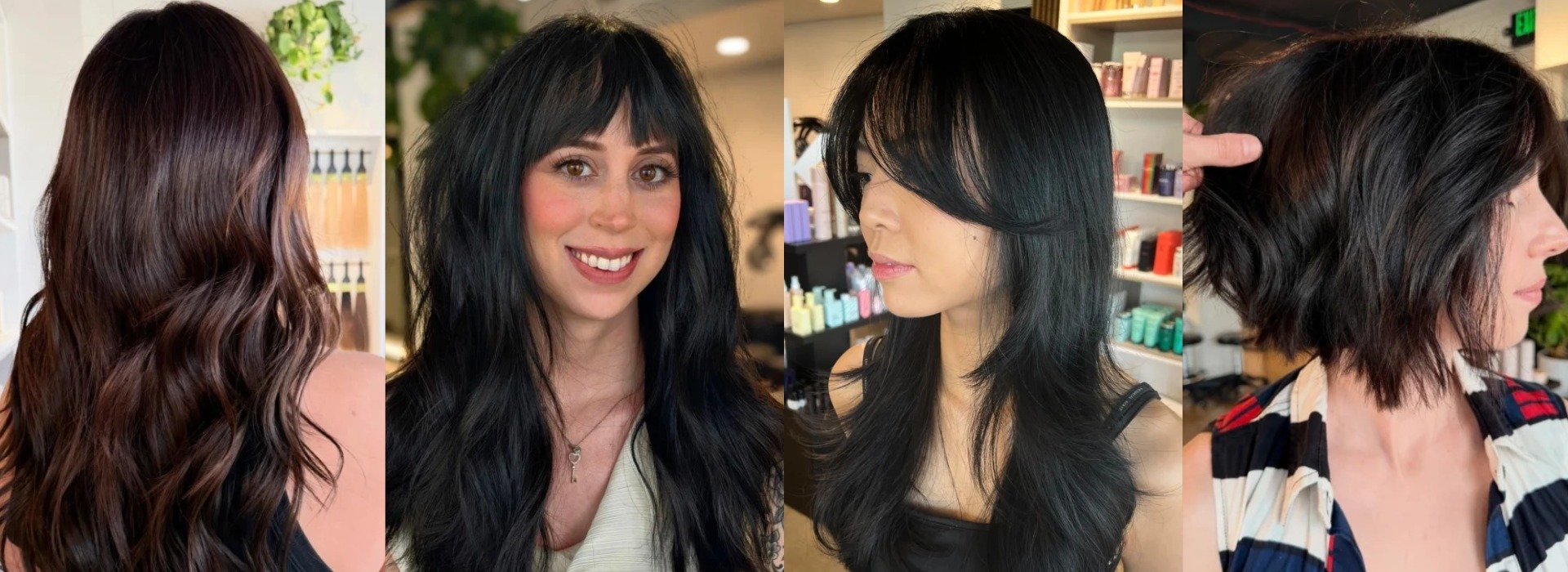
Jet black is the deepest, most saturated version, a true level 1 with a mirror-like finish. It makes the strongest statement and creates the strongest contrast against skin.
Soft black sits one level up. It is the black most people are born with somewhere in the world: dark enough to read black indoors, but it gives back a little warmth in sunlight. If you want black that looks like you were born with it, this is the shade to ask for.
Blue-black carries a cool blue undertone that flashes in direct light. It is the most fashion-forward of the family and the one that photographs most dramatically, though the blue tone is also the first thing to fade.
Espresso is technically a brown-black, the warmest and most forgiving member of the family. It is the easiest black to grow out or lighten later, which makes it the smart pick if you are not certain black is a long-term relationship.
Matching black to your skin tone
The same undertone check from any color decision applies here. Green-reading veins and a preference for gold jewelry point to warm undertones; blue or purple veins and silver point to cool; a mix points to neutral.
Cool undertones handle jet black and blue-black naturally, since the blue base echoes the cool in the skin. Warm undertones usually look better in soft black or espresso, because a stark blue-black against golden skin can pull sallow. Neutral undertones have the run of the family.
The bigger question with black is contrast. Deep skin tones and olive skin carry jet black and blue-black with ease, and the effect is striking. Fair skin can absolutely wear black, but the contrast is the look, bold and editorial rather than soft, and very fair warm complexions often find espresso or soft black more livable day to day. None of this is a rule about who is allowed to go black. It is a prediction about which version you will still love in month three.
One more detail colorists check that clients rarely think about: your eyebrows. A black that sits several levels darker than your brows announces itself as dyed, which is fine if that is the look you want. If you want black that reads believable, soft black or espresso closes that gap, or your colorist can suggest a brow tint to meet the color partway.
The commitment, spelled out
Here is the part most articles bury: black is the easiest color to put on and the hardest to take off. Black pigment is dense and layers itself deeper into the hair with every application. Lightening it later is a color correction project, usually done gradually to protect the hair, and box-dye black makes that project harder because of the banding it leaves behind.
That is why the smartest way into black is a demi-permanent gloss first. A demi black deposits without the same grip, fades out over weeks instead of demanding removal, and lets you live with the color before you marry it. Ask for it as a test drive. If you love it, permanent black is waiting; if you do not, you have lost nothing.
This is also where the salon-versus-box-dye difference is at its widest. Box black deposits the same heavy pigment over everything, old color included, every single time. Each application adds another layer, and those layers are what color correctors mean when they talk about banding: stripes of stacked dye that lift unevenly and hold on hardest at the mid-lengths. A salon black is formulated for what your hair actually is that day, applied only where it is needed, and toned to a deliberate finish, which keeps the exit door open in a way box dye never does.
The flip side of the commitment is that black is cheap to keep. There is no toner schedule, no root panic if your natural hair is already dark, and grow-out on a near-natural black is close to invisible.
What Denver does to black hair
Black hair color has one job, shine, and Denver works against it from two directions. At altitude, UV exposure runs roughly 25 percent stronger than sea level, and UV oxidizes black dye, pulling it slowly toward a dull reddish brown. The dry Front Range air does the rest, roughing up the cuticle so the surface scatters light instead of reflecting it. A jet black that looked lacquered in March can look rusty and flat by August here, and the fix is maintenance, not a formula change: a UV protectant or hat outdoors, cooler washes with color-safe shampoo, and a gloss refresh when the shine drops. Blue-black wearers in Denver should expect the blue to fade first and plan on periodic toning to keep the cool edge.
Keeping black from going flat
The common complaint about all-over black is that it can read as one solid block, what clients call the wig effect. Dimension solves it. Fine, subtle highlights a level or two above the base, or lowlights woven through a softer black, keep the color moving in the light without breaking the black impression. This is also the honest answer to one of the most-searched questions in the category: caramel, deep red, and cool ash tones all pair beautifully with black bases when they are placed sparingly. Both approaches build on an all-over color base, with the dimension added on top.
Shine care carries the rest. A weekly deep conditioner earns its keep in Denver’s dry air, and an occasional clear gloss at the salon resurfaces the color between appointments. Black hides damage poorly in one specific way: dullness. Healthy hair is what makes black look expensive.
Heat styling is the quiet shine thief. Every pass of a hot iron over black hair burns off a little of the surface finish the color depends on, so a heat protectant is not optional here, and dropping the iron temperature even slightly pays off visibly. Finish with a light shine serum or oil on the mid-lengths and ends, where Denver’s dry air does its worst, and the glassy look holds between salon visits.
Talking to your colorist first
Black deserves a consultation more than almost any color, precisely because of the exit costs. Bring your color history, including any box dye, since old layers change how new pigment behaves. Expect a good colorist to ask where you want to be in a year, not just next week, and to suggest the demi test drive if you are on the fence. At Deseo Salon & BlowDry, the colorists are Wella-certified and will formulate the specific black, jet, soft, blue, or espresso, against your undertone rather than pulling one dark shade off the shelf. You can read more on our hair color services page, or book a consultation and bring your photos.
Black hair color FAQ
What is the difference between jet black, soft black, and blue-black hair?
Jet black is the deepest neutral black with maximum saturation and shine. Soft black sits one level lighter and shows a hint of warmth in sunlight, which makes it read more natural. Blue-black adds a cool blue undertone that flashes in direct light and photographs dramatically, but the blue fades first and needs toning to stay cool. Espresso, the fourth family member, is a brown-black and the easiest to lighten later. In person, the differences show most in sunlight; indoors, all four read simply as black.
Does black hair color make you look older?
It can, but the shade choice is what decides it. A stark jet black against very fair or warm-toned skin creates hard contrast that can emphasize shadows and fine lines. Soft black and espresso keep the depth while flattering more complexions, which is why colorists often steer first-timers there. Skin undertone matters more than age: cool undertones wear harder blacks well at any age. If black feels heavy, dimension through subtle highlights softens the effect without giving up the color.
Can black hair color work on fair skin?
Yes, and it can be stunning, but it is a contrast decision. Black against fair skin creates a bold, editorial look rather than a soft one, so the question is how much drama you want in daily life. Fair skin with cool undertones handles jet and blue-black well; fair skin with warm undertones usually looks better in soft black or espresso, which keep depth without pulling the complexion sallow. A demi-permanent version is the low-risk way to find out before committing.
What color highlights go with black hair?
Caramel and toffee tones are the classic pairing, warm enough to glow against a black base without fighting it. Deep reds and burgundy read rich and subtle in black hair. Cool ash or silvery tones suit blue-black bases specifically. The technique matters more than the color: fine, sparse pieces a level or two above the base add dimension while keeping the overall black impression, while chunky or too-light highlights break it entirely. Placement around the face brightens without a full commitment.
Where can I get black hair color done in Denver?
Look for a Denver salon that formulates color rather than applying one stock shade of dark. Deseo Salon & BlowDry works that way: Wella-certified colorists match jet, soft black, blue-black, or espresso to your undertone, and will suggest a demi-permanent test run if you are new to black. A consultation matters more with black than with most colors because your color history and exit plans shape the formula. Bring photos of the exact black you want, in daylight if possible.
Is black a natural hair color?
Yes. Black is the most common natural hair color in the world by a wide margin, produced by high concentrations of eumelanin. Natural black usually behaves like what colorists call soft black, a level 1 to 2 that gives back warmth in strong light. True jet black with a blue cast is rarer in nature, which is why dyed jet and blue-black read as deliberate, styled choices while soft black and espresso read as born-with-it colors.
Can I dye black hair brown later without bleach?
Usually not with dye alone. Hair color cannot lift hair color, so brown dye over black does close to nothing. Going from dyed black to brown means removing pigment first, either with a color remover that breaks up the dye molecules or a gentle lightening process, and it is often staged over more than one visit to protect the hair. Espresso and demi-permanent blacks are the exception, since they fade or lift out far more easily. This is exactly why the exit conversation belongs in the consultation.
How do you remove black hair color?
In a salon, black is removed with a dedicated color remover or a controlled lightening process, usually staged over multiple sessions with bond-protecting treatments in between. Dye removers break the pigment molecules apart without lifting your natural color; lighteners go further but cost more in hair condition. Box-dye black is the slowest to remove because of layered banding. Home removal products exist but work unevenly on dense black pigment, so if the goal is a clean lighter color, professional correction is the reliable route.