

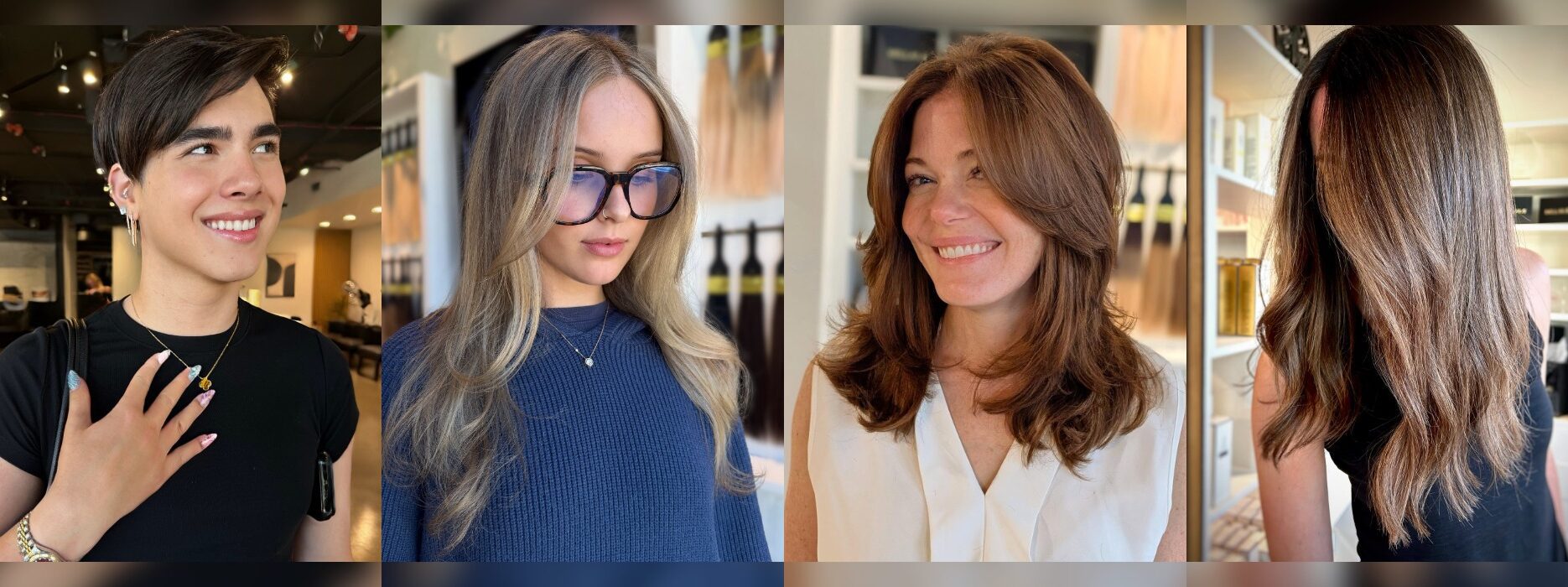
Type “best hair salon” into any search box and Denver will hand you a few hundred options, most with beautiful photos and four-point-something stars. None of that tells you whether the person behind the chair has spent real time on hair like yours. Figuring out how to choose a Denver hair salon starts somewhere less obvious than the reviews: your own hair. Its texture, its density, its color history, and the way it behaves in a semi-arid city sitting a mile above sea level. This guide works through that match, from reading your own hair correctly to the consultation questions that separate an honest salon from a sales pitch.
Start With Your Hair, Not the Salon’s Instagram
Salon portfolios are curated. Your hair is not. Before comparing salons, get clear on what you are actually bringing to the chair, because “what hair type do I have” turns out to be the question people ask most, and the answer has four parts.
Texture is the shape your hair takes when it dries on its own: straight, wavy, curly, or coily. Strand width is different from texture. A fine strand is hard to feel when you roll it between two fingers, while a coarse one feels closer to sewing thread. Density is how much hair you have overall, which you can judge by how full a ponytail feels or how visible your scalp is at the part. Porosity describes how fast your hair absorbs water and product. Low-porosity hair beads water on the surface and takes forever to fully soak; high-porosity hair drinks everything instantly and dries just as fast.
Then add history. Virgin hair, grown-out box dye, old highlights, a smoothing service from last spring. A colorist plans around all of it, and the honest version of that history changes what a salon can safely do on day one. A stylist who mostly works on thick, virgin brunette hair will approach your fine, twice-bleached blonde very differently, or should. The point of knowing your own hair is that it turns you from a browser into a matcher.
Denver Hair Plays by Different Rules
A salon in Houston and a salon in Denver can offer the same menu and still be solving different problems. Denver sits at 5,280 feet in a semi-arid climate. The air holds less moisture for most of the year, and ultraviolet exposure climbs with altitude, so color here fades faster in the sun and cuticles roughen sooner. Come winter, forced-air heating pulls indoor humidity down even further, which is when the static, flyaways, and snapped elastics show up.
For your hair, that means moisture is not a luxury add-on in this city. Dry air makes fine hair staticky, makes curly hair frizz and lose definition, and makes color-treated hair feel like straw faster than it would at sea level. A salon that works well in Denver builds around this: conditioning and bond-repair options like Olaplex and deep conditioning offered alongside color rather than as an afterthought, formulas chosen with fade resistance in mind, and stylists who ask what your hair does in February, not just what it did in the chair.
When you are evaluating a salon, listen for this local awareness. A consultation that mentions sun exposure, hydration, or how your color will hold up through a Colorado summer is a consultation with someone who has watched Denver do its work on a few thousand heads of hair.
Match the Menu to Your Hair, Not the Other Way Around
Most salon menus list the same services. The useful question is which of those services your hair actually calls for, and how often the salon does that particular thing well.
If color is your priority, look past the word “balayage” on the menu. Balayage is a result, the soft, sun-lightened dimension you see in the photos, and salons reach it through different routes: foils, foilayage, teasylights, root melts, or hand-painting, depending on your hair and the colorist’s judgment. What matters is seeing that outcome in the salon’s color work on hair with your starting depth and width. Fine hair, for instance, usually looks best with dimension placed to build visual thickness, while coarse, dark hair needs a colorist who knows how much lift it can take without damage.
If your hair is fine or thinning and you want more, that points toward a salon with genuine extension experience, since method choice matters more for fine hair than for any other type. The wrong attachment on a fine strand shows and stresses the hair; the right one disappears.
If frizz and daily fighting with a blow dryer are the complaint, that is smoothing territory. One distinction worth knowing before you book: smoothing reduces frizz and makes hair easier to manage, but it is not straightening, and a good stylist will say so plainly. If you are weighing the two main options, our comparison of keratin treatments and Brazilian Blowouts covers how they differ.
And if the cut itself is the problem, growth patterns, cowlicks, and density decide more than trends do. A haircut that respects how your hair grows will still look right six weeks out, not just on the day it happens.
Questions Worth Asking Before You Book
A consultation is an interview that runs in both directions. You can learn most of what you need from five questions.
First, how much of the stylist’s regular week looks like your hair. Not can they do it, but how often they actually do. Second, which color line the salon uses and why. The answer tells you if product choice is a decision or a habit. Wella, for example, is a professional color system with formal certification behind it, which is a different thing from a shelf of retail dye. Third, if they keep formula records, so your color can be repeated or adjusted instead of reinvented every visit. Fourth, what the result you want will cost you in maintenance, in honest terms: how often you will be back, and what happens if you skip a visit. Fifth, what they would refuse to do to your hair today. That last one sounds odd, but it is the fastest way to find out who you are talking to: a professional, or a yes machine. Platinum in one session on previously colored hair is the classic example of a request that deserves a no.
Do a little reading before you ever sit down. Stylist bios tell you who specializes in what, and reviews are most useful when you search them for your own situation: your texture, your color goal, your problem. A salon that publishes its stylists’ backgrounds is making that homework easier on purpose.
The Difference Between a Good Salon and the Right One
Plenty of Denver salons do good work. The right salon for you shows a few specific behaviors. It asks about your routine and your willingness to maintain before recommending anything. It gives you a realistic timeline for big changes instead of promising them in one sitting. It tells you the price of the path, not just the first appointment. And it occasionally talks you out of things, which is the single most reliable sign that the advice is about your hair rather than the ticket total.
The warning signs are the mirror image. Every request granted without questions. A quote offered before anyone has touched or examined your hair. Pressure to add services you did not ask about. Beautiful portfolio, but nothing in it that resembles your texture or depth. None of these makes a salon bad, but each one makes it less likely to be right for you specifically, and you are allowed to keep looking. Most people try more than one salon before they find the one they stop leaving.
Where Deseo Salon & BlowDry Fits In
This guide comes from our team, so it is fair to say where we sit in the picture. Deseo has served Denver since 2015 from our home in the Highlands neighborhood at 3600 W. 29th Ave, Denver, CO 80211, with clients driving in from across the metro. Every stylist here has at least five years behind the chair and the salon average is ten. Every colorist is Wella-certified, formulas are recorded in your client profile so results repeat, and every service begins with a consultation, which is complimentary, because the matching problem this whole article describes is exactly what a consultation is for.
If you have read this far and want to test us against your own checklist, book a consultation or call us and bring your questions. Honest answers are the house policy, even when the honest answer is no.
Frequently Asked Questions
What hair type do I have?
Hair type comes down to four things you can check at home. Texture is the shape your hair takes when it air-dries: straight, wavy, curly, or coily. Strand width is the thickness of a single hair: fine strands are hard to feel between two fingers, coarse ones feel like thread. Density is how much total hair you have, visible in how full a ponytail feels. Porosity is how quickly your hair absorbs water and product. Add your color and chemical history to those four and you have the complete picture a stylist needs to plan a service.
Why does my hair feel drier in Denver than in other cities?
Denver sits a mile above sea level in a semi-arid climate, so the air pulls moisture from your hair most of the year. UV exposure is also stronger at altitude, which fades color faster and roughens the cuticle. In winter, forced-air heating drops indoor humidity further, which is why static and flyaways spike in the cold months. Hair in Denver generally needs richer conditioners, regular masks, and periodic in-salon conditioning or bond-repair work to stay soft, more than the same hair would need at sea level.
What should I ask a stylist before switching salons?
Ask how much of their weekly work looks like your hair, which color line they use and why, and if they keep records of past formulas. Bring photos of your hair on a good day and a bad day, plus an honest chemical history going back a couple of years. A stylist worth switching to will ask you as many questions as you ask them. If every request gets an easy yes with no discussion of condition, maintenance, or cost, treat that as a warning rather than a green light.
Where can I find a salon in Denver that works with fine or thin hair?
Look for a Denver salon whose portfolio and stylist bios mention density, volume, and fine-hair work specifically, because fine hair rewards precision cutting and suffers under heavy color saturation. Deseo Salon & BlowDry stylists handle fine hair daily: cuts built to add visual volume, dimensional color placed to thicken the look of the hair, and extension methods gentle enough for finer strands. In any consultation, ask how the stylist changes their approach for fine hair. The answer should involve technique, not just a product list.
Is it normal to switch hair salons?
Completely normal, and stylists know it happens. Hair needs change, people move across town, and sometimes the fit is simply wrong. You owe no explanations, but do bring your color history to the new salon, since your previous formulas save the new colorist real guesswork. If you loved your old stylist and only left because of a move, many colorists can get close to a previous formula from clear photos and an in-person look at your hair.
Do I need different salons for color and haircuts?
Not usually, and keeping both in one place has a real advantage. Color and cutting interact: layers change how dimensional color reads, and the condition of colored hair affects how a cut falls. A salon that does both keeps one record of your hair and can plan the two services together. The exception is highly specialized work. If you need advanced color correction or a specific extension method, pick the salon for that skill first and let the haircut follow it.
Where can I find the best hair salon in Denver for my hair type?
Start from your hair’s specifics: texture, strand width, density, color history, and the maintenance you can honestly commit to. Then look for Denver salons whose portfolios show repeated results on hair like yours, whose colorists hold recognized certifications, and whose process starts with a consultation instead of a pitch. Deseo Salon & BlowDry staffs stylists with a five-year minimum and a ten-year average of experience, uses Wella-certified colorists exclusively, and begins every service with a complimentary consultation. Reading reviews for mentions of your specific hair type is the fastest shortcut.